


Why the Case Closing Isn’t the End
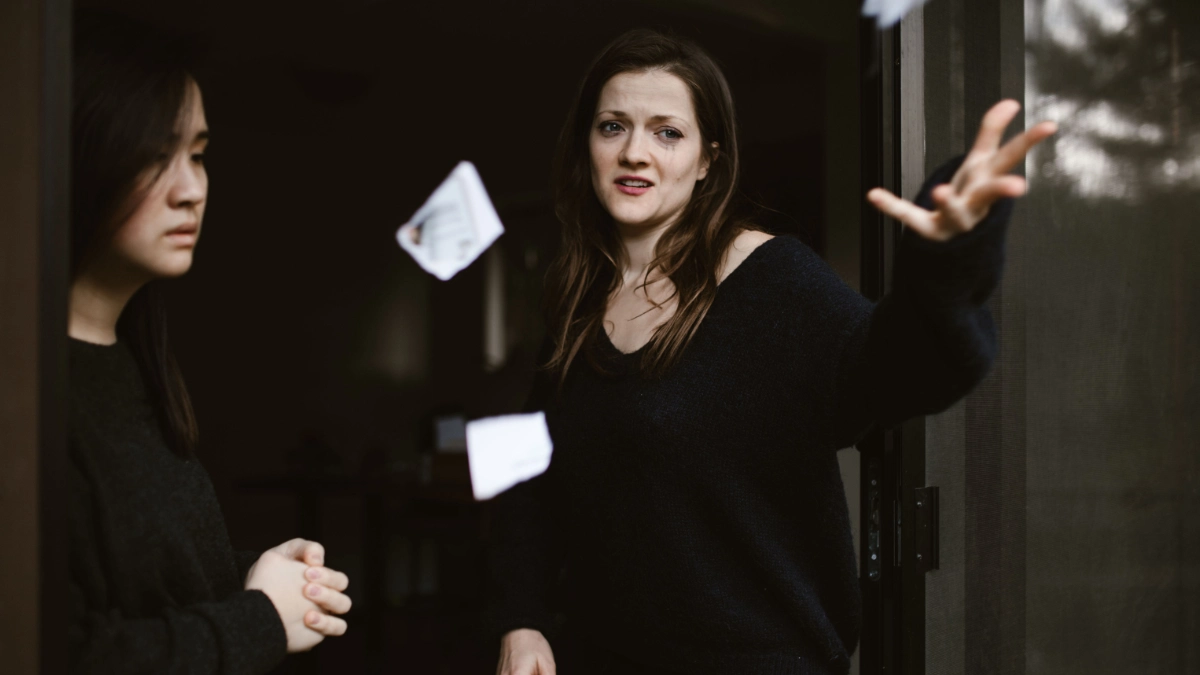
You can usually feel it before you can name it. A grievance has been resolved, or an investigation has concluded, the paperwork is filed, and the process is formally over, and yet something in the room has changed. People are a little more careful with each other. Conversations stop when you walk in. The work continues, but the ease has gone. That feeling is the part no report closes: the trust between people, which doesn’t reset just because a decision has been signed off.
Most trustees and CEOs treat the end of the process as the end of the problem. It isn’t. Closing a case settles a question; it doesn’t repair a relationship, and the two are easy to confuse because they finish on different timelines. The formal matter ends on a date. The trust recovers or doesn’t, over months, depending on what leaders do next. I am writing this article about the second part: not how to run the process, but how to rebuild what the process leaves behind.
Before you read on, what this article is and isn’t
This is about culture and trust – the human repair after a conflict has been formally dealt with. It is not advice on how to run a grievance, investigation, disciplinary or dispute, and it isn’t legal or HR advice.
If you are in the middle of a live dispute or staff issue, get proper support first. ACAS provides free, authoritative guidance on workplace conflict, grievances and mediation, and an employment law adviser can help with anything specific to your situation.
And if the conflict involves a safeguarding concern – harm, or risk of harm, to anyone who comes into contact with your charity – it must never be handled quietly or kept internal. Trustees have a duty to act on it and to report serious incidents. Follow the Charity Commission’s safeguarding guidance for trustees, and where there is criminal behaviour or risk to a child or adult at risk, involve the police and your local safeguarding team. Nothing in this article changes that duty.
With that said, if the formal side is handled and what’s left is the harder, slower work of rebuilding how people feel about each other and about the leadership, that’s what the rest of this is for. You can also book a call to talk it through.
Why doesn’t resolving the conflict rebuild the trust?
Because people remember how they were treated far longer than they remember what was decided, months after a case closes, few will recall the precise findings. Almost everyone will recall whether they felt heard, whether the person who should have stepped up did, and whether the charity’s stated values actually showed up when it was inconvenient. Feelings outlast facts. A resolution that was procedurally correct but felt cold or one-sided leaves a residue that no amount of “the matter is now closed” will shift.
Small charities feel this more sharply than large ones, for a reason that has nothing to do with how well the process was run. In a big organisation, people who’ve fallen out can be moved to different teams, different floors, different buildings. In a charity of nine people, or a board of seven, they can’t. The trustee who felt overruled is at the next meeting. The two staff members who clashed shared the same small office on Monday. There is no distance to absorb the discomfort, so unrepaired trust doesn’t quietly fade – it sits in the room, meeting after meeting, shaping what people will and won’t say. That’s why the aftermath matters more here, not less.
And recovery takes active effort. It is not a passive announcement, a single clear-the-air meeting, or an email saying everyone should now move on. Those can mark a beginning, but trust is rebuilt by what happens in the weeks after them, not by the gesture itself.
What does rebuilding trust actually take?
Consistency, mostly. Trust doesn’t come back because a trustee or CEO says the right thing once; it comes back because they do small things reliably, over and over, until people’s nervous systems stop bracing. The content of those actions matters less than their reliability. A promised update that actually arrives. A concern that gets acknowledged rather than deflected. A minor decision was handled openly when it would have been easier to handle it behind closed doors. Each one is small. The pattern is what rebuilds credibility.
A few behaviours do most of the work. Following through on commitments, especially the small ones nobody would chase you on. Communicating openly, including when the honest update is “we haven’t sorted this yet.” Admitting a mistake without immediately defending it – people forgive errors far faster than they forgive a leader who can’t acknowledge one. And modelling the behaviour you expect from everyone else, because after a conflict, people watch what leaders do far more closely than they listen to what leaders say.
This is realistic for a stretched, part-time leadership precisely because it doesn’t depend on grand gestures or large amounts of time. It depends on small acts done consistently. For a volunteer trustee or an overloaded CEO, that is good news: you don’t need a programme. You need to be reliable in public, repeatedly, for longer than feels necessary.
Conflict shows you the culture you actually have
A conflict, handled honestly afterwards, tells you more about your charity than a year of smooth meetings. It shows how decisions get made under pressure, how accountability works when it’s uncomfortable, and whether the values on the website are real or decorative – the same quiet patterns our guide on why charity boards fail examines in calmer conditions. That’s worth something; if you’re willing to look at it as information rather than as an episode to be buried.
The useful questions afterwards are quiet ones, asked without blame. Did we live our values when it was inconvenient, or only when it was easy? Are we learning from this, or just deciding who was at fault? Can this become a point where the charity gets clearer about who it is – rather than a thing everyone agrees never to mention again? Avoidance is the tempting option and the costly one. A conflict that gets buried rather than understood tends to resurface, often in a worse form, because the conditions that produced it were never named.
The Charity Governance Code puts integrity and a healthy culture at the centre of good governance, and treats how a board behaves – not just what it decides – as part of its job. The period after a conflict is when that behaviour is most visible and most remembered. If you want to read more on how boards hold up when they’re tested, our articles and guides cover it in more depth.
What can you actually do, starting this week?
None of this needs to wait for a plan. The work of rebuilding trust is made of small, repeatable actions, and the point is to start one and keep it going rather than to do all of them at once.
Five things to do – start with one
– Be visible. Show up consistently and in person where you can. After a conflict, absence reads as avoidance, even when it isn’t. Presence is the first signal that leadership hasn’t checked out.
– Model the standard. Respect, follow-through and accountability have to be visible in how you behave, not described in a message. People calibrate to what they see.
– Acknowledge what happened, for learning. Name that it was hard, focus on what the charity takes from it, and leave the blame out. Acknowledgement without re-litigation.
– Invite people into the repair. Trust grows faster when people help shape what changes than when change is announced to them. Ask what would make things feel workable again.
– Notice whether it’s working. Watch for the quiet signals; people speaking up again, tension easing in meetings, and adjust. Recovery isn’t linear, and noticing is part of the work.
If you’re holding the culture side of this on your own and would value a steady outside view, a free 30-minute call can help you decide where to focus first. For the formal side of any dispute, please use ACAS or an employment law adviser rather than this call.
Where this leaves you
Rebuilding trust after a conflict isn’t about getting it perfect, and it isn’t about one big conversation that fixes everything. It’s about showing up, doing what you said you’d do, and staying visible while people decide – slowly, on their own timeline – whether the place feels safe again. People forgive mistakes faster than they forgive avoidance. Being present beats being perfect.
So pick one of the five and start it this week, and keep it going past the point where it feels necessary; that’s usually right when it’s starting to land. And if the conflict exposed something deeper about how your charity is governed or led, that’s worth looking at properly rather than hoping it settles. Our charity management and governance support is built for exactly that kind of underlying work, and because trust rebuilds through working with people rather than around them, our approach is to support your team rather than take over. A conversation is a reasonable place to begin – alongside, not instead of, the professional and safeguarding routes named above where they apply.