

Charitable giving in the UK fell last year. If your charity leans on one or two income sources, that should worry you more than it worries most. But the answer isn’t to fundraise harder. New research from the Charities Aid Foundation points at something small charities treat as soft and separate: local connection. The charities that are seen and felt in their area raise more, and from steadier sources. Here is why, and what to do about it.
If a steadier income is a review you have been meaning to do, you can book a free clarity call, and we will help you work out where to start.
What the 2026 giving figures actually tell you
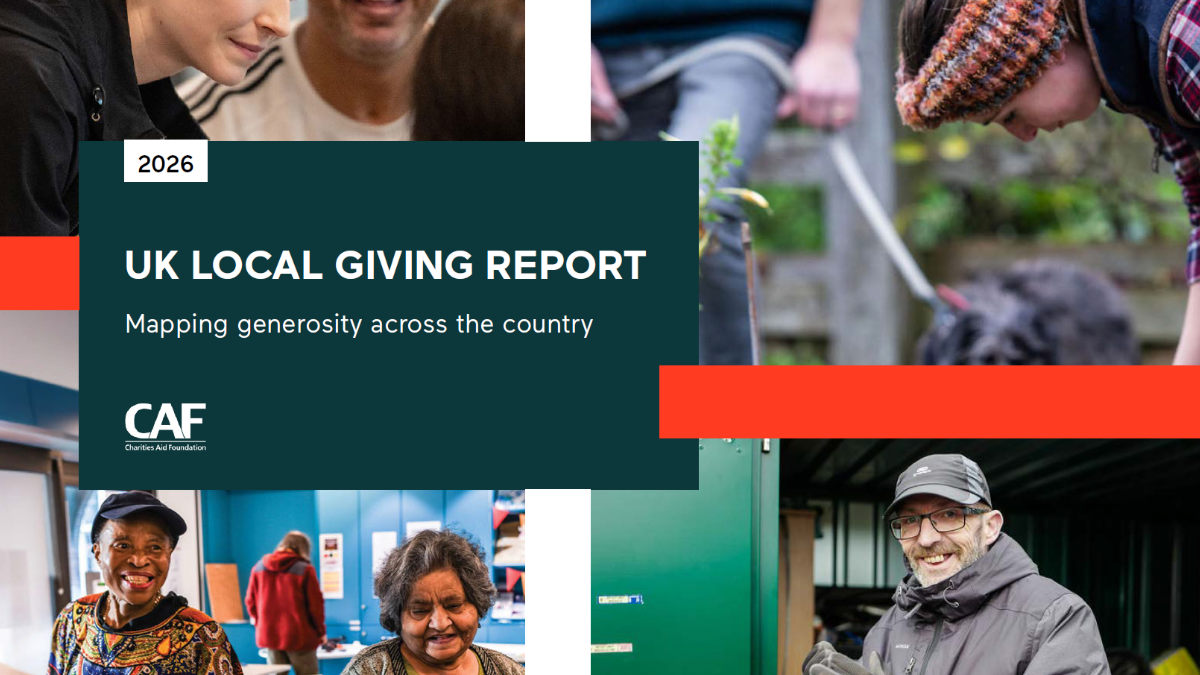
Here is the headline every charity has now read. In 2025, people gave an average of 0.9% of their income to charity, down from 1.1% the year before. Total donations fell to £14 billion, from £15.4 billion in 2024; the first drop in five years. On its own, that number invites one response: work the donors harder, send more appeals, chase more grants.
The useful figures sit underneath. The same research found that where people can see charities making a difference locally, they are much more likely to give at all (64% against 46%), twice as likely to give locally (51% against 26%), and three times as likely to volunteer (16% against 5%).
Then the figure that should stop you. Around 48% of people either think charities have made no difference where they live, or do not know whether they have. Not half the public deciding that charities don’t matter. Half the public is unable to see what charities near them actually do.
So the appetite is there, and it is mostly unmet. Which means the constraint on your income probably isn’t that people stopped caring. It is that fewer of them can see what you do, feel any connection to it, or know how to take part. That is a different problem. It has a different fix.
Why leaning on one income source leaves you exposed
No small charity sets out to depend on a single funder. It happens by drift. A grant comes in, it covers the core costs, and the energy that might have built other income goes into delivery instead. Which is, after all, the work. Then renewal season arrives, the funder’s priorities have moved, and a gap opens that nothing else is positioned to fill.
When giving across the sector is falling, that exposure gets sharper. One grant not renewed. One major donor is stepping back. A charity that looked stable on paper is suddenly running on reserves.
Picture a small community charity with an income of £160,000, where two grants cover most of it. That shape is fragile by design, and nobody in the building feels it until the letter arrives. The charities that ride this out are the ones with more than one place their money comes from. Some grants. Some local giving. Some earned income. Some regular donors who stay because they feel part of something. There is a wider view of the options in the Ultimate Guide to Funding for UK Charities.
Here is where the CAF finding stops being about goodwill and starts being about income structure. Local engagement isn’t a nice-to-have sitting next to fundraising. It is the thing that turns one-off givers into regular ones. That brings in volunteers who later become donors. That makes a local business want its name beside yours. Treated properly, community connection is an income source. It is also the one that most small charities never build on purpose.
This is the whole argument of my guide, Charity Income That Doesn’t Depend on One Source. It is written for founders, trustees, and CEOs stuck in reactive fundraising cycles, and it shows how to build income as a connected system rather than a set of disconnected activities, so one decision by one funder can’t put the whole organisation at risk.
How to start building a steadier income this quarter
You don’t fix this with a strategy away-day and a wish list. You fix it by adding one source at a time, starting with the one that fits your charity, your community, and the capacity you actually have. Four moves, each with a test you can apply this week.
1) Make your local impact visible
The CAF research is blunt: people give when they can see the difference, and half the public can’t see it. If your work is invisible in your own area, that is the cheapest gap to close. Local press, a real presence at community events, telling people plainly what changed because you exist.
The test: ask three people outside your charity – a neighbour, a local shopkeeper, someone at the school gate – what your charity does. If they can’t answer, your impact is invisible to exactly the people the report is talking about. This is the heart of what we mean by communication and sustainable fundraising, and there is more on reaching people across channels in our guide to a charity omnichannel strategy.
2) Turn participation into giving
In the lower-income areas the report looked at, a real minority of people want more chances to get involved – 27% in Birmingham Ladywood, 26% in Manchester Rusholme and Liverpool Riverside. They tend to be younger, and they cite not knowing where to start. Give them a way in that doesn’t begin with a request for money. Volunteers, attendees, and supporters become donors far more readily than strangers do.
The test: look at how someone who wants to help actually starts with you. If the only routes in are “donate” or “nothing”, you are losing the people who would have given later.
3) Protect the income that already works
Diversifying does not mean walking away from a reliable funder to chase something new. It means adding to what works, not replacing it. Some of the steadiest additions are the ones charities overlook; the Gift Aid Small Donations Scheme and stronger monthly giving are among them.
The test: name one income source you could strengthen without dropping anything you already do. Start there.
4) Make income a board question
Income decisions are strategic decisions. They shape who you can serve, and for how long. They belong with the trustees, not only with whoever writes the applications.
The test: list your five largest income sources and work out what share each is of the total. If any single source is over 40%, that is a concentration worth surfacing at the next board meeting, with the percentage written down, not described in general terms. If your board doesn’t handle income this way yet, it is a governance and direction question before it is a fundraising one.
None of this is fast. Income diversification is a long-term shift, not a campaign. But the first move, looking at your current income honestly and choosing one place to strengthen, is something a board can do this quarter. If the deeper problem is that the strategy stopped guiding these decisions a while ago, the e-book on when your strategy stops guiding decisions goes into that.
When the problem is bigger than one income stream
Sometimes the fragility isn’t really about income at all. It is about capacity, or governance, or a strategy that stopped matching reality two years ago, and income is just where the strain shows. Weak systems and operations often sit underneath what looks like a fundraising problem. The charities I work with usually arrive thinking they have a money problem. More often, the money is the symptom, and the pattern underneath it is the cause; something I have written about in why small charities stop adapting.
If you have read this far and recognised that the whole picture needs attention -strategy, capacity, relationships, governance, together that is normal. It is also usually too much to untangle from inside the day-to-day.
What you can do this week
Before you finish reading, three things you can do this week without a board decision or anyone’s permission.
- Do the maths. List your five largest income sources and the share each represents. Anything over 40% is a concentration to name out loud.
- Ask three outsiders what you do. If they can’t say, your local impact is invisible, and the report says that it is costing you donors.
- Pick one source to strengthen. Not five. One. The one that fits your community and the time you actually have.
Start with whichever feels most uncomfortable. That is usually where the real exposure is.
Book a free 30-minute call, and we’ll give you a clear read on where your income is exposed and what to strengthen first; steps you can use whether or not we end up working together. If you’d rather see how ongoing support works, take a look at our support plans.